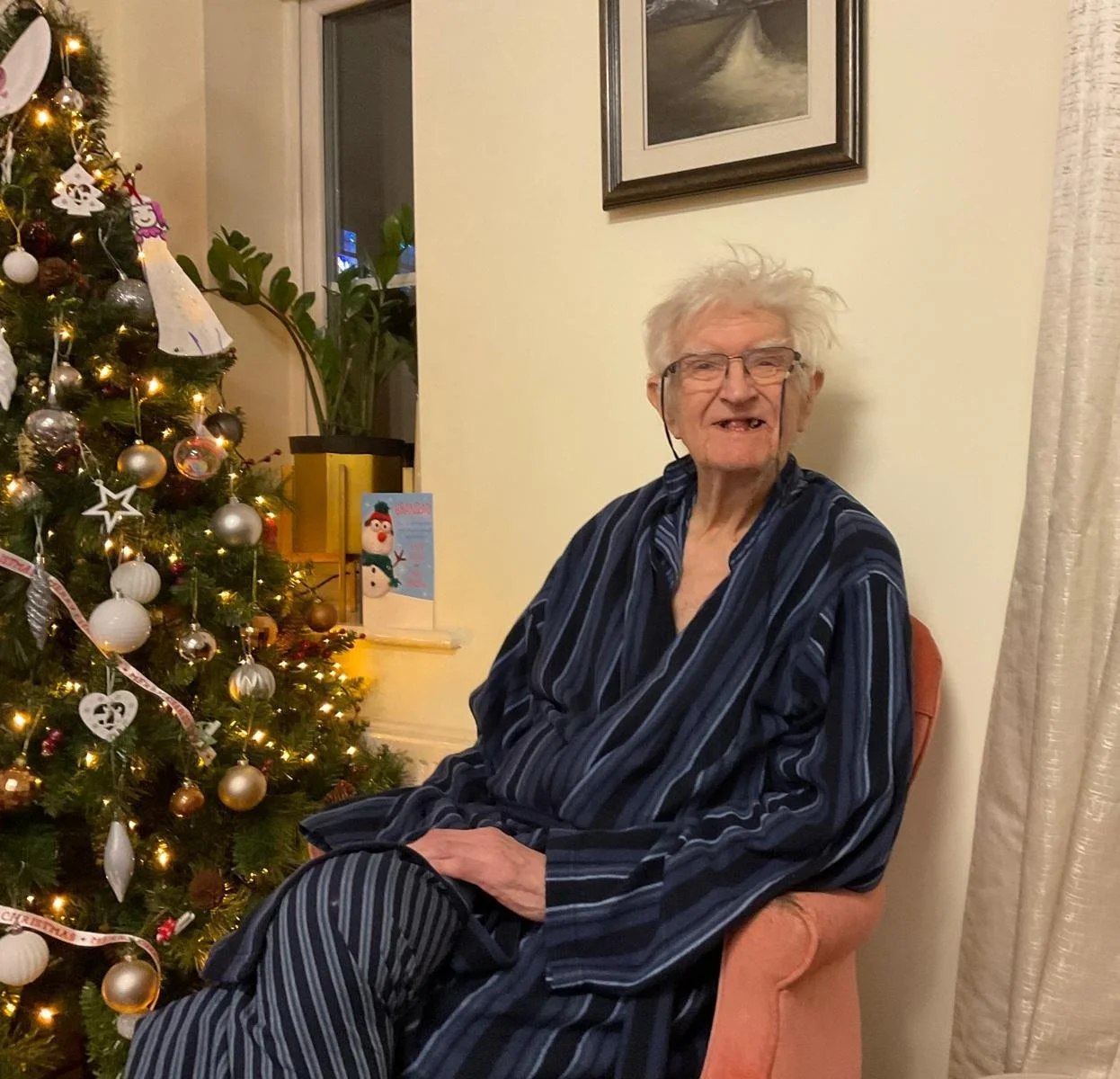
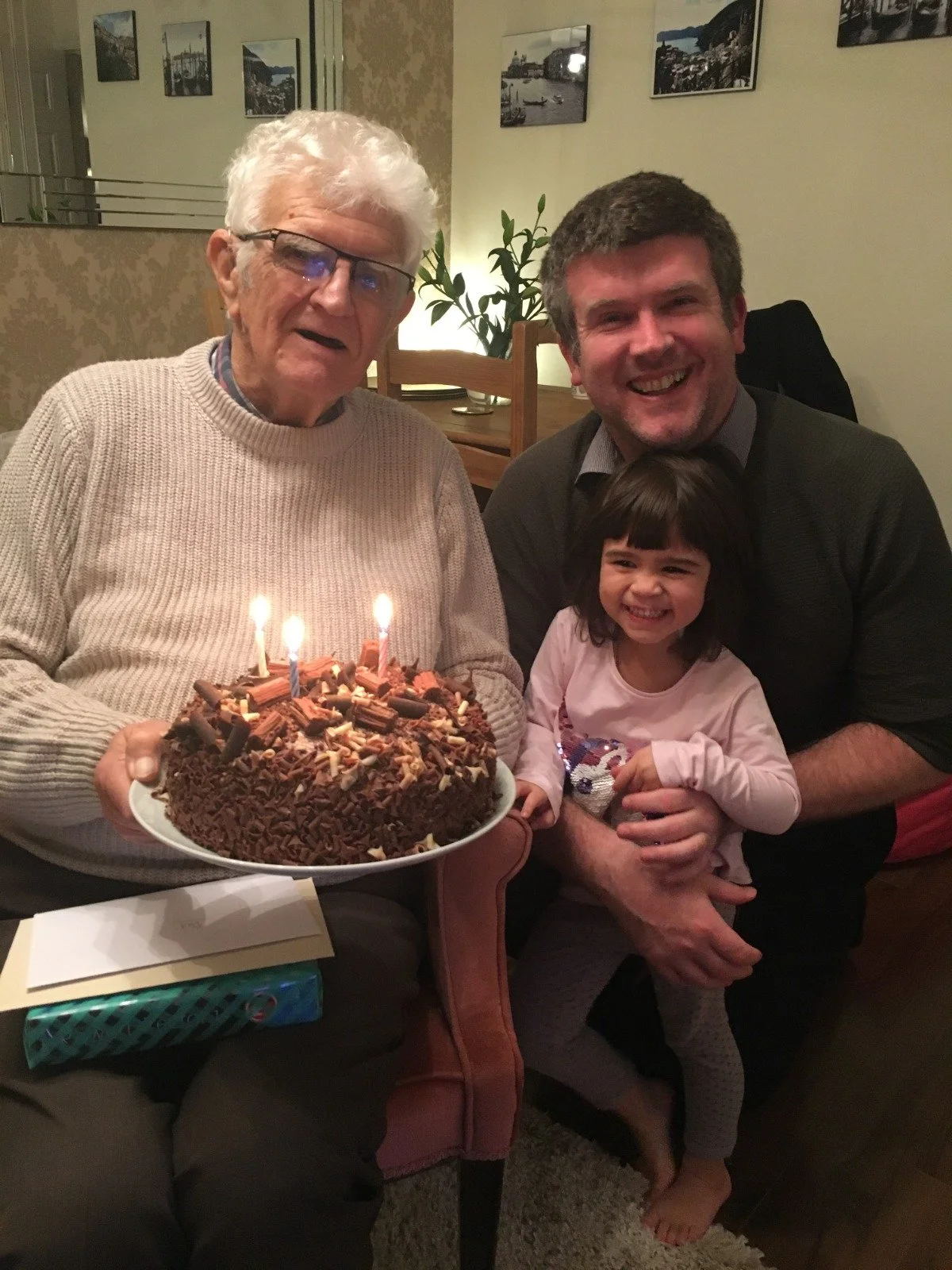
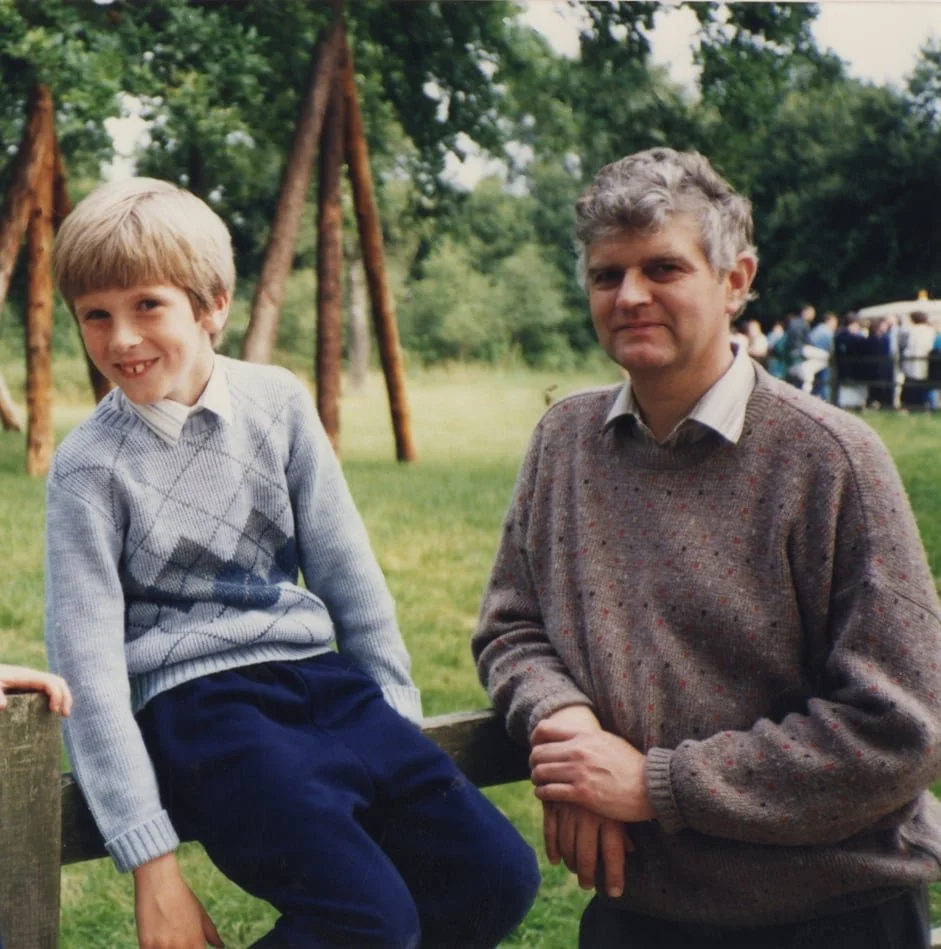
David and his dad, Alan
I want to share a particularly harrowing story about my dad, Alan, and what happened to him here in Doncaster, UK.
Dad’s behavioural changes
In 2005, my father, an ex-retired police sergeant, was prescribed pramipexole and later ropinirole for Restless Legs Syndrome. Both drugs are known as dopamine agonists. They are also prescribed for people with Parkinson’s, pituitary tumours and depressive disorders.
Around this time, Dad started shooting his own teammates in an online war game played with friends and was eventually excluded from the group he’d been a part of for some time. I merely thought he’d become clumsy and was getting old. Never one for having a wide circle of friends, I remember feeling sorry for him.
This would be the start of a series of behavioural changes that seem to closely follow starting these drugs or their dose being increased.
Within months, he had gained significant weight and, in his own words, developed a “craving for sweet foods”. His depression worsened, his sleep became severely disrupted – sleeping for only around 30 minutes at a time - his legs swelled with fluid, and he became short of breath.
Over the next 18 years, concerns were repeatedly raised about his compulsive sugar consumption from Dad and family members.
In 2007, he started taking ropinirole but his physical symptoms and behaviours persisted. In early 2008, his dose was increased twice in quick succession – a sign that the drugs were having the opposite effect causing a paradoxical worsening of the restless legs through a process known as augmentation. His symptoms would begin earlier in the day.
A few months after the dose increase, Dad started changing his investments. Previously, he’d been very risk averse and tightfisted when it came to money. By 2012, his portfolio had shrunk from 36 low risk to three highly risky investments. Over a five-year period, my dad lost a total of £350,000 including from spread betting. At times, these investments lost £20 k in just a couple of days and nearly £50 k in a week. They often shot up in value too.
In 2010, my dad’s ropinirole was increased one final time. A few months later, around the time of my wedding, my dad’s hypersexualised behaviour is documented for the first time.
My dad became addicted to pornography, ear wax removal and medical gore videos. In 2015, he told his GP that he was addicted to certain images and videos. He described the urge as “100 per cent” in strength, said he needed a “daily fix”, and described it as a “compulsion”.
In 2016, Dad incorrectly thought my mother was having an affair after 47 years of marriage. His condition for halting divorce proceedings related to hypersexuality.
I have found no evidence that my dad was ever warned about the side effects of dopamine agonists. On 26 July 2025, I read a BBC News article on these drugs for the first time. I felt like I’d been hit by a sledgehammer.
The official leaflets for these drugs mention side effects such as “excessive gambling”, “increased sexual interest”, “compulsive shopping” and “binge eating” – and labels the frequency as “not known” or “uncommon”. Hundreds of people had approached the BBC. When I read the article, I instantly thought about my dad.
What happened to my dad raises very serious questions as to why his dopamine agonists were never investigated. They were certainly not mentioned to me, his caregiver, for the final six years of his life.
When harm met the NHS
Dad’s compulsive sugar consumption had serious physical consequences. He developed diabetes in 2013 and later suffered over 60 infections, some lasting months. At one stage, he was eating around 60 choc ices a week, alongside cakes and sweets, and drinking only lemonade.
Dad’s care needs were extensive, and I repeatedly struggled to secure help. In 2019, after nearly thirty infections, I was finally given “rescue antibiotics”. Once I had them, I managed to keep him out of hospital almost completely for 18 months - but by then Dad was extremely frail.
Dad lost nearly all his teeth from decay and had severe gum bleeding while on blood thinners. His pyjamas, bedding and the floor were often covered in blood. On one occasion, at 2am and after days of bleeding, I had to take him to A&E to get gauze to pack his mouth.
In 2021, I wrote to the NHS explaining that he was eating up to one kilogram of sugar a day and spending £200 to £300 a month on sweets and chocolate. The email was added to his GP record
He was admitted to hospital 36 times and spent close to a year of his life there. My wife and I both acknowledged that these infections often came after sugar binges. I included this in the email.
These admissions exposed him to numerous failures. There were delayed discharges, discharges that paramedics described as “failed”, and long waits for ambulances. After one failed discharge, still wearing his hospital tag and soiled, we waited 10 hours for an ambulance. On another occasion, he was discharged at 2am and I was left transferring him from his wheelchair into the car in wind and rain while he was bleeding from a cannula site. He could barely stand.
The struggle continued at home. His needs increased, but obtaining basic equipment and care was slow and exhausting. After being bedbound for nearly two years, a hoist finally arrived shortly before he died, with the wrong sling. I used it once.
He experienced severe gout and associated deformities in his hands, feet, elbows, knees and shoulders – downstream of years of diabetes, infections, kidney and heart problems and constant illness. I spent over six months asking for physiotherapy because of his flexed knees. I later found a letter in his GP records concluding that my dad’s deformed knees were probably caused by prolonged periods of sitting in a wheelchair, therefore there was nothing that could be done. He used one a few times to get to and from the car for appointments. He never received the physiotherapy. It was as if he’d been given up on without our knowledge.
At the end of one hospital admission, I was pressured into accepting a care company that required improvement so dad could be discharged. I witnessed the care staff handling Dad in a way that deeply concerned me. I saw it on camera. I reported it as a safeguarding matter. After doing so, I was red flagged for putting the camera in his bedroom. The carers frequently missed calls.
Although he was supposedly fast-tracked for Continuing Healthcare (CHC), it took 50 days from the first phone call to receiving it. We benefitted from this state funded care for the final two weeks my dad was at home.
I rang and emailed over 100 times to try and get him assessed - CHC, social services, his GP. His GP didn’t even know what CHC was. When CHC finally answered the phone after days of trying, I was told I had used a “rude tone of voice” when I was simply shocked that someone had picked up.
On one occasion I had to call the GP surgery 144 times before I was finally placed in a queue of seven people. When it was my turn, I was told there were no appointments left and that I had to call back the next morning. This happened repeatedly. Getting appointments was next to impossible. I was only ever given 10‑minute appointments, limited to one issue each time. Many appointments were over the phone or on video call, even for physical problems.
A diagnosis that troubled us
In 2017, Dad received a diagnosis of vascular dementia affecting the frontal lobes. Vascular disease affecting frontal-executive networks can produce impulsive, compulsive or disinhibited behaviour. Dopamine agonists can also alter reward processing and impulse control. That overlap made it especially important to examine the timing of Dad’s medication, dose changes, illness and behavioural symptoms rather than assuming a single explanation.
Dad was judged to have insufficient capacity to make important decisions.
Three months earlier, an Approved Mental Health Professional assessment had recorded no cognitive or behavioural concerns. His GP had also recorded the same.
The later hospital psychiatric assessment took place while Dad had a life-threatening infection and temporary delirium. I have found no evidence of an MRI scan or that a second opinion was sought. My brother and I were not consulted as close family members. Crucially, from the reports I have seen, his medication was not considered.
A month later, after his physical health had improved, a private assessment concluded that he had capacity to make important decisions. He later regained his driving licence, and when he eventually surrendered it, he did so on his own terms.
One month before he died, a Continuing Healthcare assessment recorded no evidence that he lacked capacity and described a lucid conversation and ability to make decisions about his care.
From my perspective, this did not resemble a gradual or stepwise decline in Dad’s memory, cognition or behaviour.
These inconsistencies do not prove what happened. But they raise serious questions about whether the full chronology of Dad’s symptoms, medication, illness and periods of delirium was examined with the care it required.
Dad’s final days
His “highly libidinous thinking” continued to feature until death in 2023.
The last thing he ate was a choc ice. The last thing he drank was lemonade.
On 24 July 2023, Dad died of a final infection, heart failure and frailty. Until this point, I’d visited him every day in hospital. For the final two, I wasn’t there. It was all too much.
I was denied one last chance to visit him in hospital after he died. His funeral was attended by me, my wife and the cemetery groundsman. There was no eulogy. He’d lost so much because of his behaviours. In the six years I was his caregiver, not a single family member, friend or acquaintance visited him. Not one.
Ignored
From 2017 to 2021, Dad and I repeatedly challenged his dementia diagnosis. My wife and I were deeply concerned about the way it had been reached and about the consequences it had for Dad. We raised those concerns through different routes, but they went nowhere.
In November 2023, five months after Dad died, I complained again. Having reflected on his history and on the years that followed the diagnosis, I said that I did not believe the diagnosis had served Dad or our family and purpose, and that I did not think he had ever had dementia.
On 26 July 2025, I read a BBC News report about harms linked to dopamine agonists. It was the first time I understood that compulsive eating, extreme financial risk-taking, hypersexuality and other major changes in behaviour could be recognised adverse effects of these medicines. When I then reviewed Dad’s records and gathered further evidence, I tried to reopen the complaint.
Since then, my experience has been that organisations have addressed isolated incidents, procedural points and time limits rather than examining the full picture: Dad’s dopamine-agonist prescribing and dose increases; the timing of his behavioural changes; the possibility of augmentation; the apparent lack of documented warnings or monitoring; his infection and delirium at the time of the dementia assessment; disputed collateral history; and later evidence that did not appear to show a progressive cognitive decline.
This pattern has repeated, including twice with the Parliamentary and Health Service Ombudsman. I have received correspondence and procedural responses, but no transparent, independent or joined-up investigation into what happened to Dad.
The result has been a system that appears better able to manage and close a complaint than to investigate the underlying safety questions. Dad’s case was complex—but complexity should have led to a more careful, joined-up review, not less scrutiny.
A wider pattern
Dad’s experience is one family’s story, and it cannot answer every question by itself. But it sits alongside a wider pattern emerging through BBC reporting and through accounts received by Dopamine Agonist Action Group which I co-founded. DAAG have been contacted by over 200 people impacted from the far north of Scotland to the south coast of England.
People describe concerns about gambling, financial losses, binge eating, illicit drug use, compulsive shopping, sexual behaviour, relationship breakdown, withdrawal difficulties, distress, risk-taking and major changes in behaviour or judgement after taking dopamine agonists, some of which has led to serious criminality.
The precise details differ from person to person. But recurring themes are delayed recognition, insufficient warnings, shame, secrecy and a struggle to have concerns taken seriously.
These behaviours often remain hidden so are not disclosed to a GP or family member. If they have been taking medication for years, neither they nor their clinician may immediately think to connect a new behavioural problem with the drug.
That is why low levels of formal reporting cannot, on their own, demonstrate that the risks are small. Before a suspected reaction is reported, it must first be recognised, then disclosed, linked to medication and formally recorded. For many people, that process breaks down long before a report is made.
Why the inquiry matters
DAAG exists because too many people and families are left to face these questions alone. It supports affected people, listens for recurring patterns, raises awareness and campaigns for honest warnings, genuine, informed consent, meaningful monitoring, safer prescribing and proper support for people harmed by these medicines or struggling to reduce them.
The petition I launched is not asking the public to decide what happened in my father’s case. It asks for an independent public inquiry capable of examining questions that individual families cannot answer alone.
My father cannot be helped now. But other families still can be.
If you recognise aspects of this story in your own life or in somebody close to you, please contact DAAG.
Thank you for your support.